Kuromon Market Food Walk: A Guide to Osaka’s Best Street-Food Stalls
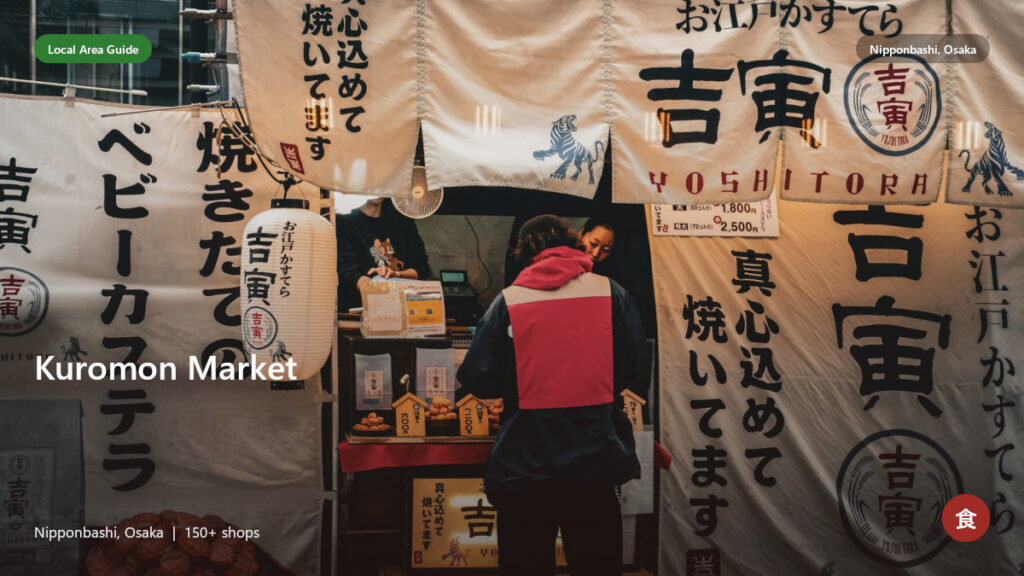
Kuromon Market (Kuromon Ichiba) is a roughly 580-meter covered shopping arcade in Osaka’s Nipponbashi district, home to more than 150 shops selling fresh seafood, fruit, meat, and street food. Long known as “Osaka’s Kitchen,” it has become one of the city’s most visited food destinations for overseas tourists, with many stalls now offering grab-and-go items designed for eating while walking (a style known in Japan as tabearuki).
TOC
Market Basics
- Address: Nipponbashi, Chuo-ku, Osaka (arcade runs between Sennichimae-dori and Namba)
- Access: About 2 minutes on foot from Osaka Metro Nipponbashi Station
- Hours: Individual shop hours vary, but many stalls are open roughly 9:00/10:00–18:00; some restaurants stay open later into the evening
- Good to know: The market can get very crowded with tourists, especially around midday; some stalls do not accept credit cards, so carrying cash is recommended
Notable Stalls and What to Try
- Shin Uoei (新魚栄): A seafood shop established in 1948, well known for its “tako-tama” (octopus skewer topped with a quail egg), sold in small (around ¥500) and large (around ¥600) sizes. It is one of the market’s most-photographed street snacks.
- Kuromon Mitoya (黒門三都屋): A Japanese confectionery shop with more than 70 years of history, known for its “Kuromon daifuku” — a soft rice-cake (mochi) filled with sweetened bean paste (anko), which keeps refrigerated for about three days, making it a popular souvenir.
- Gyucho Kuromon (牛兆 黒門店): A shop offering reasonably priced Japanese beef, with grilled beef skewers (gyu-kushi) recommended as an easy walking snack.
- Onabeya Kuromon: A sit-down izakaya-style restaurant at the market’s entrance serving oden and hot-pot dishes for visitors who want a proper seated meal (see our dedicated article on this restaurant for details).
For readers unfamiliar with Japanese food-market terms: “tabearuki” literally means “eating while walking,” referring to the practice of buying a small snack from a stall and eating it on the spot rather than sitting down — a common way to sample multiple foods quickly at markets like Kuromon. Note that some individual shops ask customers not to walk and eat directly in front of their stall out of consideration for other shoppers, so look for posted signage.
Why It Matters for Visitors
Kuromon Market offers a condensed introduction to Osaka’s food culture — fresh seafood (including sushi, oysters, and grilled scallops), wagyu beef, traditional Japanese sweets, and casual street snacks — all within a compact, walkable arcade. Because of its popularity with tourists, English signage and English-friendly stalls are more common here than in many other Osaka markets, though not universal, so it remains one of the more approachable food destinations in the city for first-time visitors.
Getting There
The market runs through Nipponbashi, about 2 minutes on foot from Osaka Metro Nipponbashi Station (Sennichimae and Sakaisuji lines), and is also within walking distance of Namba and Shinsaibashi.
Google マップ
最新の評価・口コミ・営業状況はGoogleマップでご確認いただけます