Yakitori: A Guide for International Travelers
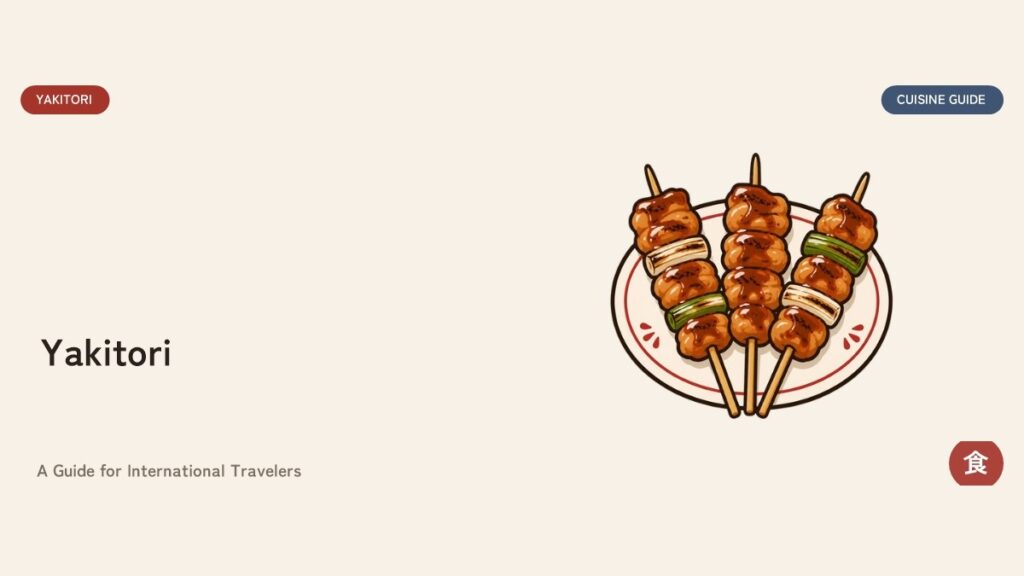
Yakitori is bite-sized chicken, grilled on skewers over charcoal and seasoned with either a sweet soy glaze (tare) or salt (shio). Shops typically serve a range of cuts alongside grilled vegetables, usually ordered a few skewers at a time.
What Is Yakitori?
Yakitori is bite-sized pieces of chicken threaded onto skewers and grilled, traditionally over charcoal. Skewers are generally seasoned one of two ways: tare, a sweet-savory soy-based glaze brushed on while grilling, or shio, simple salt. Most yakitori shops also serve skewered vegetables (shiitake mushrooms, green peppers) and sometimes pork or other items, so “yakitori shop” often really means “skewer shop” more broadly.
The Many Cuts and Parts You Can Order
Yakitori menus go well beyond plain chicken breast. Common cuts include momo (thigh), negima (thigh alternated with scallion), kawa (crispy grilled skin), and tsukune (chicken meatballs, often brushed with tare). For diners open to trying more adventurous cuts, menus frequently also include reba (liver), nankotsu (cartilage, prized for its crunch), bonjiri (tail), hatsu (heart), and sunagimo (gizzard) — a reflection of yakitori’s roots in using as much of the chicken as possible rather than just the familiar cuts.
Yokocho Culture and How to Order
Grilling skewered food over charcoal has roots in Japan’s Edo-period street-food (yatai) culture. Yakitori in its more recognizable, widely available form is generally associated with the postwar era, when affordable chicken skewers became a popular way to make use of various cuts of chicken at a time of broader food and meat scarcity. Yakitori alleys (yokocho) — dense clusters of small, independently run skewer bars — grew up around train stations in this period and remain a defining feature of yakitori culture today; Tokyo’s Shinjuku Omoide Yokocho, home to several restaurants in this guide’s database, is one of the best-known examples.
- Choose tare (sweet soy glaze) or shio (salt) for each skewer type — many regulars mix both across an order rather than picking just one.
- Order a few skewers at a time rather than everything at once, or look for a course set (omakase-style) at shops that offer one if you’d rather not choose individual cuts.
- Some yokocho shops have a minimum order policy per person, especially during busy hours — ask if you’re unsure.
- Many small, independent yakitori counters in alleys like Omoide Yokocho are cash-only and have limited seating, so be prepared with cash and patience during peak times.
Frequently Asked Questions
Is yakitori only chicken?
Mostly, yes -- chicken is the defining ingredient -- but many yakitori shops also serve pork, beef, or vegetable skewers, so the menu is often broader than the name suggests.
Is yakitori gluten-free or halal?
Tare sauce is soy-sauce-based and typically contains wheat, so it is not gluten-free; shio (salt-seasoned) skewers are a simpler option if you need to avoid wheat, but always confirm with the shop. None of the yakitori restaurants in this guide are documented as halal-certified, so if halal dining is a requirement, look for restaurants with verified halal certification elsewhere on this site.
How much does yakitori typically cost?
Individual skewers are usually inexpensive, often in the range of roughly 100-300 yen each, so a meal of several skewers plus drinks is a relatively affordable way to eat and drink out.
What's a good way to order if it's my first time?
Start with a small, varied order (a couple of chicken cuts plus a vegetable skewer) in both tare and shio, see what you like, and keep ordering more as you go -- staff are generally used to guiding first-timers.
Where to Try It
Yasubee
Best for: Omoide Yokocho's only large, privately-owned restaurant, open since 1940.
View full details →Horaiya (Daini Horaiya)
Best for: Known as "the first offal restaurant in Yokocho," open since 1947.
View full details →Tatsunoya
Best for: A cosy, first-timer-friendly yakitori bar, a comfortable entry point to Omoide Yokocho.
View full details →Torie
Best for: A quality-focused counter known for its charcoal yakitori, seafood, and oden.
View full details →Imaiya Honten, Osaka
Best for: A Shinsaibashi yakitori specialist built around female Akita hinai-jidori, a heritage chicken breed, including shiro-reba and chicken-bone broth.
View full details →Torisei Honten, Kyoto
Best for: A yakitori restaurant run by the Yamamoto Honke sake brewery inside a roughly 150-year-old Fushimi brewery building, with unfiltered fresh sake sold by volume.
View full details →Torikizoku, Shijo-Kawaramachi, Kyoto
Best for: The flat-price yakitori chain's Kawaramachi branch, where every menu item costs the same.
View full details →Kuruma Namba Ebisubashi, Osaka
Best for: Miyazaki jidori charcoal yakitori near Namba Station, at this location for over 30 years.
View full details →