Sushi: A Guide for International Travelers
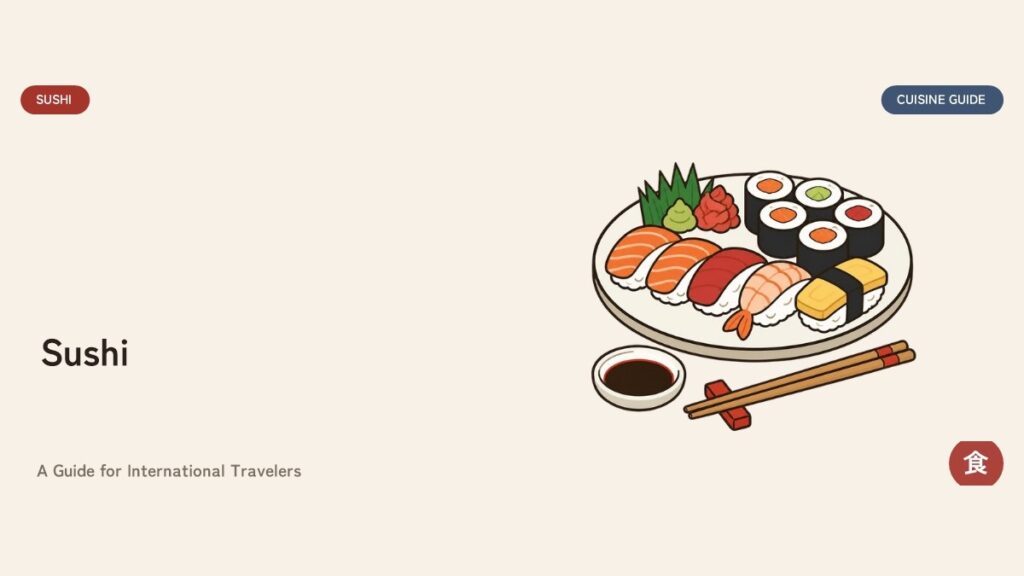
Sushi is vinegared rice (shari) served with a topping (neta) of raw or cooked seafood, egg or vegetables. It began as fish fermented with salt and rice, and today's hand-shaped nigiri grew out of the food stalls of Edo (Tokyo). Conveyor-belt sushi, which first opened to customers in Osaka Prefecture in 1958, is the cheapest way to start: JNTO says plates typically start at 100 yen, though many chains now start slightly higher; a chef's-choice omakase at a counter costs far more and needs a reservation. Dip the topping, not the rice, in soy sauce.
What Is Sushi?
Sushi is not simply raw fish. The Japan National Tourism Organization (JNTO) explains that the word refers to the slightly sweet, vinegared rice, sometimes called shari, and the topping on it is called neta. Toppings can be raw or cooked seafood, egg or vegetables. Sashimi, slices of raw fish without rice, is often served at sushi restaurants, but JNTO notes that it is not sushi.
Sushi in Japan ranges from a pack of rolls at a supermarket to a reserved counter seat where the chef decides every piece. This page explains where sushi came from, the main types you will see on a menu, the regional styles of Tokyo, Osaka and Kyoto, the different kinds of sushi restaurant, how to eat it, and what to know about budget and dietary needs.
Where Sushi Came From
According to JNTO, the history of sushi starts in the rice paddies of the Mekong Delta, where farmers fermented fish with salt and rice and then threw the rice away. The official Tokyo tourism site, GO TOKYO, describes the same early form in Japan: a preserved food of seafood packed in salt and rice, where the rice was not eaten. As rice vinegar came into use, people began to eat vinegared rice together with the fish.
The nigiri that most visitors picture came later, in Edo, the old name for Tokyo. GO TOKYO explains that during the Edo period, boxed sushi was sold at food stalls alongside soba and tempura, and then one stall owner began serving a ball of vinegared rice topped with a slice of fish instead of a box. Those early pieces were two or three times larger than today’s, but they were easier to eat than boxed sushi, so the style spread quickly. Because it used the plentiful fish of Edo Bay, it became known as Edomae-zushi, sushi “from in front of Edo.” JNTO calls this Edo-era style of toppings on vinegared rice balls hayazushi, literally “fast sushi.”
The conveyor belt is a 20th-century addition. Genroku Sangyo, the company behind Genroku Sushi, says its founder Yoshiaki Shiraishi took the idea from the conveyor belts in a beer factory, completed a rotating sushi counter in 1957 and opened the first Mawaru Genroku Sushi in Higashiosaka, Osaka Prefecture, in April 1958.
Types of Sushi on the Menu
- Nigiri. A hand-shaped mound of rice with the neta draped over it. This is the standard order at most sushi restaurants.
- Maki. Rice and fillings rolled up in nori seaweed with a bamboo mat, then sliced. Thin rolls such as cucumber or tuna rolls are common at both chains and counters.
- Gunkan. “Battleship” sushi: a strip of nori wrapped around rice to hold loose toppings such as salmon roe or sea urchin.
- Temaki. A hand roll. JNTO describes the ingredients being placed on nori and rolled by hand into a cone.
- Chirashi. Neta served over a bowl of rice instead of being rolled or shaped.
- Oshizushi. Pressed sushi. Rice is pressed into a wooden box or mold with the topping on it, then cut. JNTO names battera, made with mackerel, as a famous example.
- Inari. A pouch of sweet deep-fried tofu stuffed with rice. It has no fish topping, but ask about the seasoning if you avoid fish entirely.
Regional Styles: Tokyo, Osaka and Kyoto
JNTO notes that many prefectures have their own style of sushi. These are the ones you are most likely to meet on a trip to the three big cities.
- Tokyo: Edomae nigiri. Edomae nigiri is the Tokyo style. JNTO says Edomae sushi typically involves a counter where customers sit, and the chef makes each piece after you order and serves it immediately. Tokyo’s islands have their own variety too: GO TOKYO describes shima-zushi (island sushi), made with local fish marinated in soy sauce and served on slightly sweeter rice with karashi mustard instead of wasabi.
- Osaka: pressed and boxed sushi. JNTO describes hakozushi, also called oshizushi, as a style associated with Osaka in which rice is pressed into a wooden mold with the topping. Osaka is also where conveyor-belt sushi began, and you can still eat at a Genroku Sushi branch in Umeda.
- Kyoto: saba-zushi. In Kyoto, mackerel sushi is the classic local style. Izuu, founded in 1781 in Gion, explains on its official site that when it was founded, lightly salted mackerel carried on foot from Wakasa along the Saba Kaido (Mackerel Road) was a great treat for ordinary people in Kyoto, and households made saba-zushi to share on festive days. Izuju, beside Yasaka Shrine, is another long-running shop for mackerel and boxed sushi.
Further afield, JNTO lists funazushi from Shiga Prefecture, a fermented sushi made from a carp found only in Lake Biwa, as an example of the older fermented style that still survives.
Kinds of Sushi Restaurant
- Kaiten-zushi (conveyor-belt sushi). Plates circulate past your seat and you take what you like, or order fresh items from a tablet. JNTO says prices typically start at 100 yen per plate and that green tea is usually self-service. Large chains such as Sushiro and Kura Sushi are the easiest place to start if you do not speak Japanese. Our conveyor-belt sushi guide covers ordering and paying step by step.
- Higher-grade conveyor-belt and casual counters. Some restaurants keep the casual format but focus on better fish, such as Nemuro Hanamaru, a chain from Nemuro in Hokkaido, or Sushi no Midori, which often has a line at peak times.
- Standing sushi. At a tachigui (standing) counter you order pieces one by one from the chef and eat on your feet, which keeps meals quick. Uogashi Nihon-Ichi is known for standing sushi.
- Counter restaurants and omakase. At a traditional counter, the chef makes each piece in front of you. Omakase means you let the chef choose the whole meal. JNTO says this tends to be the most expensive way to eat sushi, that reservations are a must, and that walking into a popular restaurant without a same-day booking tends to be difficult.
How to Eat Sushi
- Hands or chopsticks. JNTO says chopsticks are preferred most of the time, but hands are perfectly acceptable as well, especially at higher-end restaurants.
- Dip the topping, not the rice. JNTO advises dipping the neta side lightly in soy sauce. Rice soaked in soy sauce can overpower the flavor and fall apart.
- Do not mix wasabi into the soy sauce. JNTO lists this among sushi manners. It adds that these rules can be strict at nicer sushi restaurants, while conveyor-belt restaurants and chains are more relaxed.
- Use ginger between pieces. Pickled ginger (gari) is a palate cleanser to eat between orders, not a topping, according to JNTO.
- Never put a plate back on the belt. At conveyor-belt restaurants, JNTO says you may take plates freely but should never return one.
Budget, Booking and Payment
Budget. JNTO notes that you can buy fresh rolls at any supermarket for under 600 yen, and conveyor-belt plates typically start at 100 yen. Most of the conveyor-belt and standing sushi shops on this site fall in its lowest budget range. Pricier conveyor-belt shops such as CHOJIRO Hozenji in Dotonbori cost more, and a counter omakase is a significant step up from there.
Booking. Conveyor-belt chains usually take walk-ins, though popular branches have waits at lunch and dinner. Sushi no Midori’s Shibuya branch uses a LINE-based queue on weekdays and accepts online reservations. For omakase, book ahead.
Payment. Sushiro says credit cards are accepted at all of its branches, and QR code payments such as PayPay at most but not all. Smaller and older shops may differ, so carry some cash.
Vegetarian, Halal and Gluten-Free Sushi
- Vegetarian. JNTO lists vegetarian forms such as umeshiso maki (pickled plum and shiso leaf roll). However, sushi restaurants handle seafood throughout the kitchen, and seasonings and soups may contain fish stock, so ask staff if you are strictly vegetarian or vegan.
- Halal. The Muslim-travel directory Halal Food in Japan describes Asakusa Sushiken as holding a food-only halal certificate, but sources describe its status differently and the restaurant also serves alcohol. Confirm directly with the restaurant.
- Gluten. Regular (koikuchi) soy sauce, the most common type in Japan, is brewed from soybeans and wheat, and other sauces may contain wheat too. If you avoid gluten, ask whether wheat-free soy sauce is available, or bring your own.
This site does not certify any restaurant as vegetarian, vegan, halal or gluten-free. If you have an allergy or a strict diet, check each shop’s official information and ask staff before ordering. See our vegan and vegetarian dining guide and halal dining guide for restaurants that state their own policies.
Recommended Sushi by Prefecture
This site covers sushi in Tokyo, Osaka and Kyoto in separate guides. In Tokyo, start with the best affordable sushi in Tokyo, from conveyor-belt chains to standing sushi, or the best kaiten-zushi in Tokyo. In Osaka, where the conveyor belt began, see the best kaiten-zushi in Osaka. For Kyoto’s mackerel sushi and boxed sushi, see the best Kyoto-style sushi. Below are representative shops from each prefecture.
Frequently Asked Questions
Is all sushi raw fish?
No. JNTO explains that sushi refers to the vinegared rice, not raw fish. Toppings include cooked seafood, egg and vegetables, and sashimi, raw fish served without rice, is not sushi.
Should I eat sushi with my hands or chopsticks?
Either is fine. JNTO says chopsticks are preferred most of the time, but hands are perfectly acceptable as well, especially at higher-end restaurants. Dip the topping side lightly in soy sauce rather than the rice.
How much does a sushi meal cost?
It depends on the format. JNTO says conveyor-belt plates typically start at 100 yen and supermarket rolls cost under 600 yen. Omakase at a counter tends to be the most expensive way to eat sushi.
Do I need a reservation?
Not for most conveyor-belt chains, although popular branches have waits at meal times. JNTO says reservations are a must for omakase, and walking into a popular restaurant without a same-day booking tends to be difficult.
Is sushi gluten-free or vegetarian?
Not automatically. Regular (koikuchi) soy sauce is brewed from soybeans and wheat, and sushi kitchens handle seafood and may use fish stock in seasonings. Vegetable rolls exist, but ask staff before ordering; this site does not certify any restaurant.
Where to Try It
Sushiro Shibuya Ekimae
Best for: Touch-panel ordering near Shibuya Crossing; Sushiro says credit cards are accepted at all branches.
View full details →Kura Sushi Global Flagship Store (Asakusa ROX)
Best for: A conveyor-belt flagship designed with international visitors in mind, a short walk from Senso-ji.
View full details →Uogashi Nihon-Ichi (Ginza/Yurakucho)
Best for: Standing sushi counter: order nigiri piece by piece from the chef. Good for a quick lunch.
View full details →Sushi no Midori Shibuya
Best for: A step up in fish quality at a moderate price, inside Shibuya Mark City; expect a line at peak times.
View full details →Nemuro Hanamaru KITTE Marunouchi
Best for: A conveyor-belt chain with roots in Nemuro, Hokkaido, inside KITTE facing Tokyo Station.
View full details →Genroku Sushi, Umeda
Best for: A branch of Genroku Sushi, whose first restaurant opened in Higashiosaka in 1958 as the first conveyor-belt sushi restaurant.
View full details →CHOJIRO Hozenji
Best for: Kyoto-inspired conveyor-belt sushi facing Hozenji Temple near Dotonbori; tablet menus in English, Chinese and Korean.
View full details →Izuju
Best for: Mackerel and boxed sushi beside Yasaka Shrine, founded over a century ago by a craftsman who trained at Izuu.
View full details →Musashi Sushi Sanjo Honten
Best for: Conveyor-belt sushi at the Kawaramachi-Sanjo intersection since 1977; no reservation needed.
View full details →