Ramen: A Guide for International Travelers
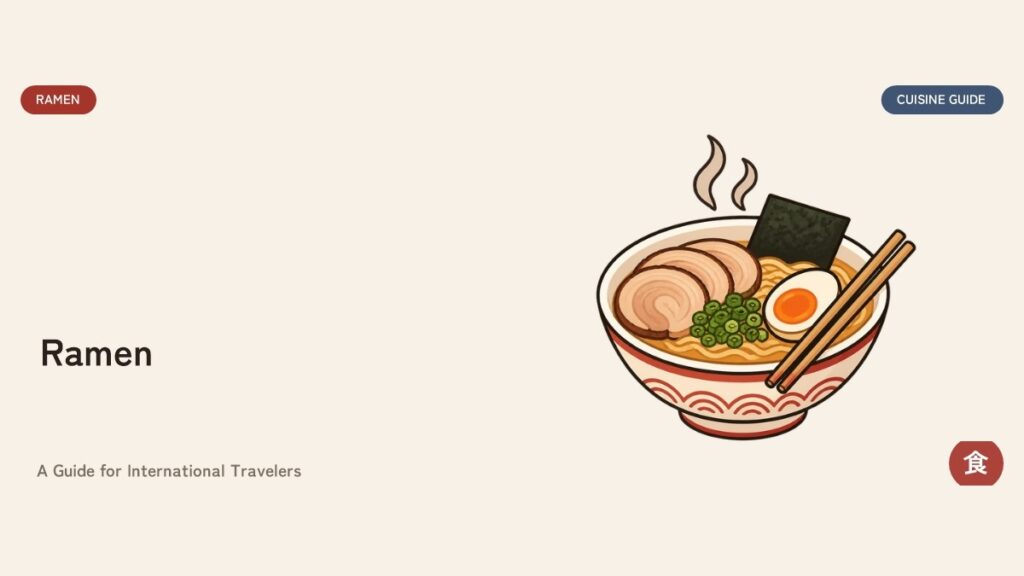
Ramen is a bowl of wheat noodles in a hot, seasoned soup. The Japan National Tourism Organization lists four common types: shio (salt), shoyu (soy sauce), miso and tonkotsu (pork bone). Japan's first big ramen boom followed the opening of Rairaiken in Asakusa, Tokyo in 1910, and nearly every region now has its own style. At most shops you buy a ticket from a machine first, and slurping is not considered rude. A bowl is inexpensive, and some shops in Tokyo and Osaka are open 24 hours.
What Is Ramen?
Ramen is a bowl of wheat noodles in a hot, seasoned soup, finished with toppings such as chashu (sliced pork), menma (seasoned bamboo shoots), green onion and nori. The Japan National Tourism Organization (JNTO) describes four common types. Three are named after the seasoning in the soup: shio (salt), shoyu (soy sauce) and miso. The fourth, tonkotsu, is defined by its creamy pork-bone soup. Most shops specialize in one or two types, and the sign or menu often shows which one a shop focuses on.
The noodles came from China, but the dish developed its own character in Japan. The Shin-Yokohama Raumen Museum, a museum devoted to ramen, names three elements that it says set Japanese ramen apart from Chinese noodle dishes: soy-sauce seasoning, curly noodles and Japanese-style dashi stock. This page explains how ramen took root, the regional styles you can taste in Tokyo, Osaka and Kyoto, how to order and eat, and what to know about budget, payment and dietary needs.
How Ramen Took Root in Japan
According to the Shin-Yokohama Raumen Museum’s ramen timeline, Chinese restaurants began appearing in Japan after the ports opened to foreign trade, and in 1910 Ozaki Kan’ichi opened Rairaiken in Asakusa, Tokyo, the shop the museum credits with setting off Japan’s first big ramen boom. After the Great Kanto Earthquake of 1923, ramen shops spread around the country, and after the Second World War, ramen stalls run by people returning from China appeared nationwide and ramen became popular in the black markets.
Two later inventions also come from that timeline. In 1955, tsukemen, noodles served apart from a dipping soup, was developed at Taishoken in Nakano, Tokyo. In 1958, Nissin launched Chicken Ramen, the first instant ramen. The museum notes that around this time, the name “ramen” spread across Japan, replacing the older names shina soba and chuka soba. In 2015, Tsuta in Sugamo, Tokyo became the first ramen shop in the world to receive a Michelin star.
Regional Styles and Where to Taste Them
Nearly every part of Japan has its own variety, JNTO notes. These are the styles you are most likely to meet in Tokyo, Osaka and Kyoto.
- Tokyo shoyu. The Raumen Museum describes Tokyo ramen as a clear soy-sauce soup made from chicken and pork bones, blended with Japanese dashi and served with thin, curly noodles that catch the soup. Typical toppings are chashu, menma, naruto (a fish cake with a pink swirl), spinach and nori.
- Hakata tonkotsu (Fukuoka). Pork bones are boiled hard for a long time until the fat emulsifies into a rich, milky soup, served with very thin, low-water noodles. According to the museum, kaedama is thought to have developed because thin noodles soften quickly. It is a refill of noodles only, offered as an alternative to a large bowl. In Tokyo and Osaka you can try this style at Ichiran Shibuya or Ippudo Namba; the museum’s timeline lists Ippudo as opening in Hakata in 1985.
- Sapporo miso (Hokkaido). According to the museum, miso ramen was created at Aji no Sanpei in Sapporo, developed from 1955 as a test dish for regulars and added to the regular menu in 1961. It comes with medium-thick, curly yellow noodles and stir-fried vegetables. Kyoto Station’s Kyoto Ramen Koji brings together ramen shops from different regions, and Sapporo miso has been among its rotating styles.
- Kyoto ramen. The museum traces Kyoto ramen to a food stall that appeared near Kyoto Station in 1938. Its owner later opened a shop near the station, and the dark soy-sauce soup served there became the basis of Kyoto ramen. Kyoto is also known for soups with plenty of pork back fat, and for the very thick chicken soup of Tenkaippin, whose original Ichijoji shop has served it since 1971. A short walk from Kyoto Station, Honke Daiichi Asahi serves a pork-bone and soy-sauce soup.
- Osaka. Osaka does not have one fixed style, and its best-known shops show how varied it is. Kamukura, which started in Dotonbori in 1986, serves a light, French-influenced soy-sauce soup topped with a mound of cabbage, and King-Emon in Dotonbori serves a dark “Osaka Black” soy-sauce soup.
Tsukemen and Other Ways to Eat Noodles
Many ramen shops also serve noodles without soup in the bowl. With tsukemen, you dip thick noodles into a concentrated soup served on the side. Rokurinsha, inside Tokyo Station, is widely credited as one of the shops that made tsukemen popular in the 2000s, and Menya Takei sits inside the ticket gates of Hankyu Umeda Station in Osaka. Mazesoba is a soupless bowl where you mix the noodles with the toppings and sauce; it is the signature dish at Naritaya in Asakusa.
How to Order and Eat
- Buy a ticket first. JNTO says that at most ramen shops you pay in advance at a ticket machine, though at some you order from the staff. The machine is usually near the entrance. Insert money, press the button for your bowl and any sides, take your change and hand the ticket to the staff. Our ticket machine guide walks through it step by step.
- Customize if the shop offers it. Some shops let you choose how the bowl is made. At Ichiran, for example, a paper sheet at your seat lets you set the richness of the soup, the firmness of the noodles, garlic and spice level without speaking Japanese.
- Order a refill of noodles if you want more. At shops that offer kaedama, you order extra noodles once you have finished the first serving and keep the soup in your bowl.
- Slurp if you like. JNTO says slurping is not considered rude at all and that many people find it makes eating noodles with chopsticks easier. You do not have to slurp, though.
- Finish the soup only if you want to. According to JNTO, you may drink all the soup and even lift the bowl, but leaving some soup after the noodles and toppings is still considered finished.
- Do not linger. JNTO advises that chatting is fine, but you should not stay long after you finish, especially when people are lined up outside.
Budget, Timing and Payment
Budget. JNTO calls ramen inexpensive, and most of the ramen shops on this site fall in its lowest or second-lowest budget range. The exception is a set course: at Vegan Ramen UZU Kyoto, the UZU Signature Course is 8,800 yen on the official site.
Timing. Ramen is one of the easiest meals to find late at night. Ichiran Shibuya is open 24 hours, Kinryu Ramen in Dotonbori is open 24 hours, and Kamukura’s Dotonbori main store is open from 11:00 AM to 7:30 AM the next day. Popular shops often have lines at lunchtime.
Payment. It varies by shop. Ichiran Shibuya’s ticket machine takes cash, credit cards and IC or mobile payments, while King-Emon’s ticket machine is cash only and Ramen Sen-no-Kaze in Kyoto is cash only. Vegan Ramen UZU Kyoto does not accept cash. Carry some cash for small counter shops.
Vegan, Halal and Gluten-Free Ramen
Ramen soup is usually made with pork, chicken or seafood, so a standard bowl is not vegetarian. Some shops offer plant-based bowls, but the details differ by shop and branch:
- Vegan. Soranoiro NIPPON in Tokyo Station serves a Vege-Soba made without animal-derived ingredients. AFURI lists a Rainbow Vegan Ramen on its official menu but says it is not served at every branch. MENSHO in Shibuya PARCO lists a Vegan Tantanmen, and Vegan Ramen UZU Kyoto serves only vegan ramen.
- Halal. Halal-dining guides report that Naritaya in Asakusa is certified by the Japan Islamic Trust; this site has not verified the certificate. Honolu in Namba says on its own materials that it obtained halal certification in 2020 but does not name the certifier, and Halal Ramen Naniwaya in Shinsaibashi is reported as self-declared halal.
- Gluten. Ramen noodles are made from wheat. Soranoiro NIPPON offers gluten-free brown rice noodles for an extra charge, but soups and seasonings at other shops may also contain wheat.
This site does not certify any restaurant as vegan, vegetarian, halal or gluten-free. If you have an allergy or a strict diet, check each shop’s official information and ask staff before ordering. See our vegan and vegetarian dining guide and halal dining guide for restaurants that state their own policies.
Recommended Ramen by Prefecture
This site covers ramen in Tokyo, Osaka and Kyoto in separate guides. In Tokyo, start with the best ramen in Shibuya, from solo-booth tonkotsu to yuzu shio and dried-sardine soup. For Dotonbori’s late-night shops, Kamukura’s cabbage ramen and a tsukemen counter inside Hankyu Umeda Station, see the best ramen in Osaka. For Kyoto’s dark soy-sauce ramen, Tenkaippin’s thick chicken soup and Ichijoji’s ramen street, see the best ramen in Kyoto. Below are representative shops from each prefecture.
Frequently Asked Questions
What is the difference between shio, shoyu, miso and tonkotsu ramen?
Shio, shoyu and miso are named after the seasoning in the soup: salt, soy sauce and miso. Tonkotsu is defined by its creamy soup made from pork bones. According to JNTO, most shops specialize in one or two of these types.
Is it rude to slurp ramen?
No. JNTO says slurping is not considered rude at all and that many people find it makes eating noodles with chopsticks easier. You do not have to slurp if you prefer not to.
Do I have to finish the soup?
No. According to JNTO, you may drink all of it, but leaving some soup after finishing the noodles and toppings is still considered finished.
What is kaedama?
Kaedama is a refill of noodles only, added to the soup left in your bowl. The Shin-Yokohama Raumen Museum says it is thought to have developed in Hakata because thin noodles soften quickly. Not every shop offers it.
Is there vegan, halal or gluten-free ramen?
Some shops offer it, but standard ramen soup uses pork, chicken or seafood, and the noodles are made from wheat. Soranoiro NIPPON in Tokyo Station serves an all-vegetable ramen and offers gluten-free brown rice noodles for an extra charge. Check each shop and ask staff; this site does not certify any restaurant.
Where to Try It
Ichiran Shibuya
Best for: Solo-booth tonkotsu ramen near Shibuya Crossing, one of the best-known chains for first-time visitors.
View full details →AFURI Shibuya Dogenzaka
Best for: Yuzu shio ramen with a citrus-forward broth; AFURI's official menu lists a vegan bowl, but not every branch serves it, so confirm in-store.
View full details →Ichiran Dotonbori Annex
Best for: Osaka's largest branch of the same solo-booth tonkotsu chain, in the heart of Dotonbori.
View full details →Ippudo Namba
Best for: The world-famous Hakata tonkotsu chain's Osaka branch near Namba Station.
View full details →Kamukura, Dotonbori Main Store
Best for: Osaka-born since 1986: a light, French-influenced soy-sauce soup piled with cabbage; open until 7:30 AM.
View full details →Tenkaippin Kyoto Honten
Best for: The original kotteri (extra-thick) ramen shop, open in Kyoto since 1971.
View full details →Honke Daiichi Asahi Honten
Best for: Pork-bone and soy-sauce ramen founded in 1947, about 5 minutes on foot from Kyoto Station.
View full details →Vegan Ramen UZU Kyoto
Best for: A vegan ramen course served in a dining room with a projected teamLab artwork.
View full details →Rokurinsha, Tokyo Ramen Street
Best for: A shop widely credited with popularizing tsukemen, inside Tokyo Station's underground ramen arcade.
View full details →Ibukuro, Tokyo Ramen Street
Best for: Pork-bone broth blended with seafood stock, inside Tokyo Station's underground ramen arcade; recognized in ramen rankings for over 20 years.
View full details →Soranoiro NIPPON, Tokyo Ramen Street
Best for: An all-vegetable Vege-Soba with no animal-derived ingredients, plus vegan tantanmen, inside Tokyo Station's ramen arcade.
View full details →