Tempura: A Guide for International Travelers
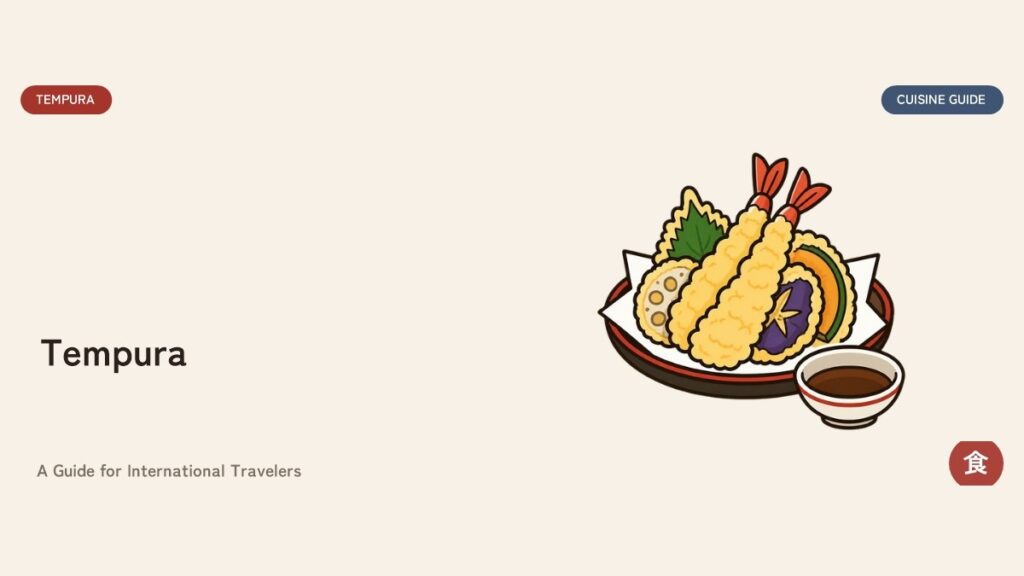
Tempura is seafood and vegetables coated in a light batter (koromo) and deep-fried. According to GO TOKYO, the frying technique was introduced by the Portuguese in the 16th century, and tempura became an everyday street food in Edo (Tokyo) made with seafood from Tokyo Bay. Eat it at a counter where the chef fries each piece to order, as tendon over rice, or on soba and udon. Dip it in tentsuyu (dashi, soy sauce and mirin) or use salt, and eat each piece as soon as it is fried.
What Is Tempura?
Tempura is seafood and vegetables dipped in batter and deep-fried. The Japan National Tourism Organization (JNTO) describes it as a light, fluffy and crunchy batter that coats seasonal vegetables or seafood. The official Tokyo tourism site, GO TOKYO, calls the coating koromo, the light, crisp batter. A tempura recipe from the flour maker Nisshin Seifun Welna makes the batter from soft wheat flour, egg and water.
In Japan you can eat tempura at a counter where the chef fries each piece in front of you, as a bowl over rice, or on top of hot noodles. This page explains where tempura came from, the main ways it is served, how it differs from other fried dishes, how to eat it, and what to know about budget, booking and dietary needs.
Where Tempura Came From
According to GO TOKYO, the origins of tempura go back to the 16th century, when the deep-frying technique was introduced to Japan by the Portuguese. GO TOKYO adds that in western Japan the technique was used mostly for vegetables, while in Tokyo tempura developed around fresh seafood.
Tempura grew up as street food in Edo, the old name for Tokyo. GO TOKYO explains that in the Edo period tempura was a popular everyday food sold at street stalls, a kind of early fast food for the townspeople, made with Edomae seafood such as anago (conger eel) and shiba shrimp. Another GO TOKYO article says tempura shops gathered near the fish markets so chefs could use the day’s catch, and that Edomae tempura is known for seafood from Tokyo Bay, with shiba shrimp from Shibaura as a signature. Chefs fried in sesame oil to mask fishy odors and bring out umami. GO TOKYO notes that the counter format appeared in the 20th century, when tempura moved from food stalls to a high-end treat.
Some of the shops on this site date from that long history. Tempura Sansada says on its official site that it was founded in Tokyo in 1837, and it describes its tempura as Edo-style tempura made with plenty of sesame oil. GO TOKYO also names Asakusa, along with Kanda and Nihonbashi, as an area of family-run restaurants that have been in business for generations, and good places for lightly battered tempura.
Types of Tempura and How It Is Served
- Counter course. At a tempura counter, the chef fries each piece to order and serves it straight from the oil. GO TOKYO says a course typically includes 10 to 15 items in the recommended order, often finishing with a rice bowl or dessert, and that you can usually add individual items. Tenichi Ginza Main Store and Tempura Kyoboshi in Gion are counter restaurants.
- Assortments and set meals. Many restaurants serve a plate of mixed tempura or a fixed set. For example, Sansada lists tempura assortments and several set meals (gozen) on its official menu.
- Tendon. GO TOKYO describes tendon as a bowl of rice piled high with crisp tempura and drenched in a glossy, sweet-savory sauce. Daikokuya Tempura in Asakusa is known for its shrimp tendon.
- Kakiage. GO TOKYO explains that kakiage is finely chopped seafood and vegetables fried together into one crisp piece, and that the combinations vary by region and season. Aoi Marushin is known for its large kakiage tendon, and Asakusa Nakasei serves a kakiage of shiba shrimp and baby clam called “Raijin-age.”
- Tempura soba and udon. JNTO lists tempura shrimp and tempura vegetables as udon toppings, and tempura as a soba topping. In a JNTO interview, a soba restaurant owner recommends tempura soba, hot soba topped with lightly fried tempura prawns, as a gentle start for first-timers.
Tempura vs. Other Fried Foods
Tempura is easy to confuse with Japan’s other fried dishes, but the coating is different. Tempura is coated in a batter (koromo), which in the Nisshin Seifun Welna recipe is flour, egg and water mixed together. Tonkatsu, by contrast, is a deep-fried breaded pork cutlet, as JNTO describes it. JNTO also explains that tori-ten, a staple of Oita Prefecture, looks like fried chicken, but as the name says, it is tempura, made by dipping bite-size pieces of seasoned chicken in batter and deep-frying them.
There are regional differences too. A JNTO feature on Kanto and Kansai food says that in Kansai people prefer tempura made only of vegetables and dipped in salt, while in Kanto vegetables and fish are used and dipped in a liquid sauce.
How to Eat Tempura
- Tentsuyu or salt. GO TOKYO explains that tentsuyu is a dipping sauce made from dashi, soy sauce and mirin. JNTO adds that it usually comes with a small mound of grated radish, which you should add to the sauce before dipping. GO TOKYO says both sauce and salt are correct, and that chefs often recommend a pairing for each ingredient.
- Follow the chef’s pairing. GO TOKYO says tentsuyu goes well with white fish or shrimp, salt brings out the natural sweetness of vegetables, and lemon brightens delicate items such as scallops or matsutake mushrooms. At Tenichi in Ginza, GO TOKYO notes, scallops come with lemon and salt, conger eel with curry salt, and matsutake with salt and sudachi citrus.
- Light to heavy. According to GO TOKYO, a course usually starts with lightly flavored vegetables and white fish, moves on to shrimp and shellfish, and ends with kakiage. A chef interviewed by GO TOKYO says there are no strict rules, but starting light keeps you from filling up on heavier items.
- Eat it straight away. GO TOKYO says to eat each piece soon after it is fried, because the batter loses its crispness over time. JNTO also notes that tempura is best served straight from the pan.
- Counter manners. GO TOKYO says crunching sounds are part of the experience, not rude. Ask before taking photos so the chef can stay focused, dress neatly and avoid shorts or sandals. Tipping is not practiced in Japan; saying “gochisosama deshita” (thank you for the meal) is the best way to show appreciation. If you cannot read the menu, GO TOKYO suggests simply asking what they recommend.
Budget, Booking and Payment
Budget. Prices vary by shop and format. On this site, Daikokuya, Sansada, Aoi Marushin and Tenpura Akimitsu are in the $$ range; Akimitsu’s official page lists a budget of 1,501–2,000 yen at lunch and 2,001–3,000 yen at dinner. Sansada’s official menu lists a seasonal vegetable tempura assortment at 1,940 yen including tax. Nakasei, SAKURA and Kyoboshi are $$$, and Tenichi Ginza Main Store is $$$$, although Tenichi also offers a lower-priced lunch tendon set.
Booking. Sansada accepts seat reservations for evening seatings only (from 16:00). Nakasei requires a phone reservation for course meals and its tatami rooms, but a la carte diners can walk in. SAKURA accepts same-day walk-ins when seats are free and encourages booking through its official reservation system. Tempura Kyoboshi is reservation-only, and Akimitsu takes online reservations through Hot Pepper.
Payment. Tenpura Akimitsu accepts credit cards and cashless payments including PayPay and Alipay. Other shops may differ, so carry some cash.
Vegetarian, Halal and Gluten-Free Tempura
- Vegetarian. Vegetable tempura is common, but GO TOKYO notes that although tempura is typically fried in plant-based oils such as canola, rice bran, soybean or sesame oil, a small number of restaurants may add lard (pork fat). It advises asking what oil is used before ordering. Tentsuyu is made with dashi, which JNTO’s vegetarian guide describes as fish stock, and the guide advises checking dashi and base ingredients for fish or animal products. You can ask for salt instead, and ask whether vegetables are fried in the same oil as seafood.
- Halal. Tempura Asakusa SAKURA announced in August 2024 that it had received halal certification from the Japan Halal Foundation. Confirm the current status with the restaurant before you go.
- Gluten. The flour maker’s recipe quoted above uses wheat flour for the batter, so do not assume tempura is gluten-free. SAKURA lists gluten-free and vegetarian courses, and its official site says its food is gluten-free and that vegetarian-friendly options are available. Tentsuyu is made with soy sauce, so ask about the sauce as well.
This site does not certify any restaurant as vegetarian, vegan, halal or gluten-free. If you have an allergy or a strict diet, check each shop’s official information and ask staff before ordering. See our vegan and vegetarian dining guide and halal dining guide for restaurants that state their own policies.
Recommended Tempura by Prefecture
Tokyo has the most tempura shops on this site. In Asakusa, several long-running shops stand near Senso-ji, and our guide to the best tempura in Asakusa compares them. In Ginza, Tenichi shows the formal counter style. In Osaka, Tempura Ippo near Higobashi serves kappo-style courses, and Tempura Endo has a branch inside Daimaru Shinsaibashi. In Kyoto, the Gion area has counter restaurants including Tempura Kyoboshi and Tempura Endo Yasaka Honten. Below are representative shops from each prefecture.
Frequently Asked Questions
Where did tempura come from?
According to GO TOKYO, the deep-frying technique was introduced to Japan by the Portuguese in the 16th century. Tempura then became a popular street food in Edo (Tokyo), made with seafood from Tokyo Bay, and the counter style appeared in the 20th century.
Should I use tentsuyu or salt?
Both are correct, according to GO TOKYO. Tentsuyu, made from dashi, soy sauce and mirin, suits white fish and shrimp, while salt brings out the sweetness of vegetables. Chefs often recommend a pairing for each piece, so follow their lead.
How much does a tempura meal cost?
It depends on the shop. On this site, most Asakusa shops are in the $$ range, while Tenichi Ginza Main Store is $$$$.
Do I need a reservation?
Not always. Many table-service shops take walk-ins, but some take reservations only for certain times or for course meals, and Tempura Kyoboshi in Kyoto is reservation-only. Check each shop page before you go.
Is tempura vegetarian or gluten-free?
Not automatically. The tempura recipe from flour maker Nisshin Seifun Welna uses wheat flour for the batter, tentsuyu is made with dashi, and GO TOKYO notes that a few restaurants add lard to the frying oil. Ask staff before ordering; this site does not certify any restaurant.
Where to Try It
Tempura Sansada
Best for: Founded in 1837 and widely cited as Japan's oldest tempura restaurant, beside Kaminarimon Gate; English and Thai photo menus.
View full details →Daikokuya Tempura (Main Branch)
Best for: Edo-style tempura in Asakusa since 1887, known for its shrimp tendon. Open every day of the year.
View full details →Asakusa Nakasei
Best for: Edo-style tempura since 1870 in a building with a Japanese garden; known for its "Raijin-age" kakiage.
View full details →Aoi Marushin
Best for: A large, multi-floor tempura and tendon restaurant between Asakusa Station and Senso-ji, known for its oversized kakiage tendon.
View full details →Tempura Asakusa SAKURA
Best for: Every staff member speaks English; near Asakusa Station. Announced in August 2024 that it received halal certification from the Japan Halal Foundation.
View full details →Tenpura Akimitsu Asakusa
Best for: Opened in 2015, with colorful plating and late hours; English menu, and credit cards, PayPay and Alipay accepted.
View full details →Tenichi Ginza Main Store
Best for: The 1930-founded flagship of Tenichi, where each piece is fried to order at the counter in house-blended sesame oil.
View full details →Tempura Ippo, Osaka
Best for: A long-established kappo-style tempura restaurant near Higobashi Station; the meal moves from tatami seating to a tempura counter.
View full details →Tempura Endo, Daimaru Shinsaibashi, Osaka
Best for: The Gion tempura shop's branch inside Daimaru Shinsaibashi, with counter-style courses fried to order.
View full details →Tempura Kyoboshi, Kyoto
Best for: A counter-only, reservation-only restaurant just off Hanamikoji-dori in Gion, serving a single chef's-choice tempura course.
View full details →Tempura Endo Yasaka Honten, Kyoto
Best for: The Gion flagship near Yasaka Shrine, serving counter-style tempura fried to order.
View full details →