Best Kaiten-Zushi in Tokyo: 4 Shops Worth Trying
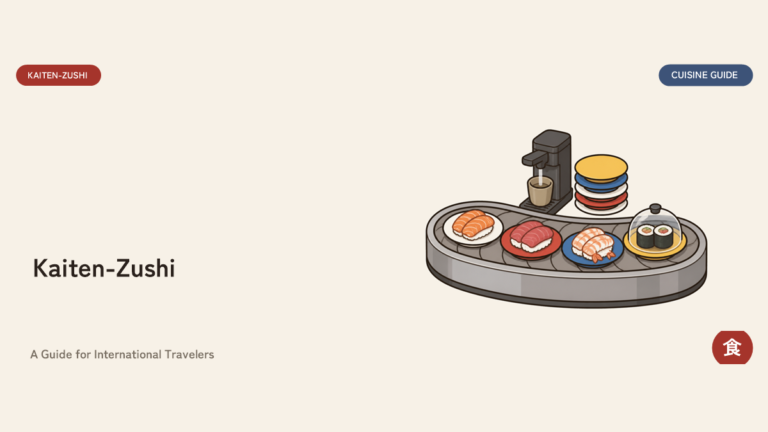
Kaiten-zushi describes sushi delivered to the table by a conveyor belt, or increasingly by a tablet-ordered high-speed lane, rather than ordered one plate at a time from a chef at the counter. Pricing is per plate and clear, and the ordering system itself is usually simple enough to use with little or no Japanese — part of why it’s a popular entry point for first-time visitors. This guide compares four Tokyo shops along three different axes, price, fish quality, and convenience, and explains how ordering works.
Born in Osaka, reinvented in Tokyo
Conveyor-belt sushi was born in Osaka, where the first restaurant opened in Fuse, Higashi-Osaka, in 1958; our guide to kaiten-zushi in Osaka covers that story in detail. What makes eating kaiten-zushi in Tokyo interesting is that, decades on, you can find shops that have reworked the system itself. Kura Sushi’s Asakusa location was built as a “global flagship” designed around international visitors. Uobei drops the constantly rotating belt and sends only the plates you order on a dedicated high-speed lane. Nemuro Hanamaru, a chain with roots in Nemuro, Hokkaido, aims a step above the budget chains on fish quality. Starting from the same idea of delivering sushi on a belt, each Tokyo shop has pushed a different lever — price, experience, or quality — and that contrast is the best reason to try more than one.
What each of the four shops actually optimizes for
Sushiro Shibuya Ekimae is Japan’s largest kaiten-zushi chain, built around touch-panel simplicity and plates from about ¥120. Kura Sushi’s global flagship store in Asakusa is explicitly designed around international visitors, with the store format itself built for multilingual use. Nemuro Hanamaru, inside Tokyo Station’s KITTE building, keeps the convenience of a direct station connection while stepping up fish quality with Hokkaido seafood — priced one tier above Sushiro and Kura Sushi, at about 1,000 to 3,000 yen per person. Uobei in Shibuya skips the continuously rotating belt altogether: everything is ordered from a tablet and delivered on its own dedicated high-speed lane, a genuinely different mechanic from the “grab what’s passing by” image most people have of kaiten-zushi.
Choosing by area: Shibuya, Asakusa, Tokyo Station
If you’re staying in Shibuya, Sushiro Shibuya Ekimae and Uobei Shibuya Dogenzaka are both close to Shibuya Station, so you can compare Sushiro’s belt-plus-touch-panel system with Uobei’s lane-only system on the same trip. If you’re sightseeing in Asakusa, Kura Sushi’s global flagship in Asakusa ROX is the convenient choice. On a day when you pass through Tokyo Station for the shinkansen or a transfer, Nemuro Hanamaru in KITTE Marunouchi, connected to the station, is the easiest stop. Tokyo is big, so picking by where you are staying or sightseeing is the practical approach.
KITTE Marunouchi, home to Nemuro Hanamaru, is a shopping building connected directly to the Marunouchi side of Tokyo Station, so you can stop by without going outside even on a rainy day or with heavy luggage.
Traveling with kids
Kura Sushi and Sushiro are both commonly recommended for families, often tied to side games or prizes linked to how many plates a diner has eaten. Whether plates can simply be taken off a passing belt depends on the shop — Uobei’s high-speed lane only delivers what’s been ordered, so the classic “watch the belt and grab something” experience that younger kids often enjoy is more limited there than at the other three.
How to order at a conveyor-belt sushi restaurant
- Check in. At many shops you enter your party size at a reception machine by the entrance, take a numbered ticket, and wait to be called. Some chains also let you join the queue in advance through an app at busy times.
- Switch the touch panel’s language. The touch panel or tablet at your seat often has a button to switch to English or other languages. Even if you can’t find it, you can order by tapping photos.
- Order, or take from the belt. Plates you order arrive on the regular belt or a dedicated express lane, and the screen or a sound tells you when they arrive. Don’t take plates someone else has ordered. Where you can take freely from the belt, choose from what passes by.
- Stack your plates. Never put a plate back on the belt once you’ve taken it, and stack empty plates on the table. Many shops price plates by color or pattern, so check the price guide first.
- Pay. Press the checkout button or tell the staff, then pay the amount calculated from your plates or order history at the register or a self-checkout machine.
A few more things worth knowing about payment and language:
- Payment is usually settled at the table or at a register near the exit; some shops calculate your bill from plate color or count, others from your touch-panel order history, so ask staff if it’s unclear.
- Of these four, only Sushiro’s card and QR payment acceptance (major credit cards, contactless, and QR codes such as PayPay) has been independently confirmed for this guide; check at the register elsewhere if it matters to you.
- Most of these chains offer a foreign-language toggle on their touch panels or tablets, though this guide has not independently confirmed availability at every location; a picture menu usually makes ordering by pointing possible even without it.
Because you can order just the plates you want, a little at a time, conveyor-belt sushi is also a good way to learn the names of sushi toppings. Start with easy-to-recognize photos such as tuna, salmon, and shrimp, then add what you like, and the ordering system soon feels natural.
Matching a shop to what matters most
Want the cheapest, simplest option? Sushiro’s touch-panel ordering and ¥120 starting price make it the default. Prioritizing a setup built specifically for international visitors? Kura Sushi’s Asakusa flagship. Only have a few minutes at Tokyo Station and want noticeably better fish? Nemuro Hanamaru. Curious about a genuinely different ordering mechanic? Uobei. To compare with other cities, see our guides to kaiten-zushi in Osaka and Kyoto.
Frequently Asked Questions
What is kaiten-zushi?
Literally "rotation sushi" -- sushi served from a conveyor belt (or, increasingly, a high-speed delivery lane) rather than ordered one plate at a time from a chef. Pricing is typically per-plate and much cheaper than counter-style sushi.
How do I order?
Most shops now use a touch-panel or tablet at your seat, often with a language button. You can usually also take plates directly off the belt as they pass. Stack your plates, then pay at the table or at a register near the exit.
Are these chains good for kids?
Yes -- several of these shops are commonly recommended for families, including Kura Sushi and Sushiro, which often have side games or prizes tied to how many plates you've eaten.
Is the belt always moving sushi I can just take?
It depends on the shop. Uobei, for example, uses a high-speed lane that only delivers items you've ordered rather than a continuously rotating belt of pre-made plates.
Quick Answer
Sushiro's Shibuya Ekimae shop is Japan's largest kaiten-zushi chain, with plates from about 120 yen and simple touch-panel ordering. Kura Sushi's global flagship store in Asakusa is built specifically for international visitors. For a step up in seafood quality while staying affordable, Nemuro Hanamaru inside Tokyo Station's KITTE building is a convenient choice. Uobei in Shibuya replaces the traditional belt with a tablet-ordering, high-speed delivery lane.
- BUDGET
- Under ¥1,000
- STYLE
- Japan's Largest Chain
Best for: Touch-panel ordering, plates from about 120 yen; dishes arrive by conveyor belt or a dedicated fast lane.
- BUDGET
- Under ¥1,000
- STYLE
- Built for Visitors
Best for: A flagship Asakusa location designed for international tourists.
- BUDGET
- ¥1,000–3,000
- STYLE
- Hokkaido Seafood
Best for: A step up in seafood quality, directly connected to Tokyo Station.
- BUDGET
- Under ¥1,000
- STYLE
- Tablet Ordering
Best for: Tablet ordering with dishes delivered by a high-speed express lane rather than a traditional slow belt.