Kaiten-Zushi (Conveyor-Belt Sushi): A Guide for International Travelers
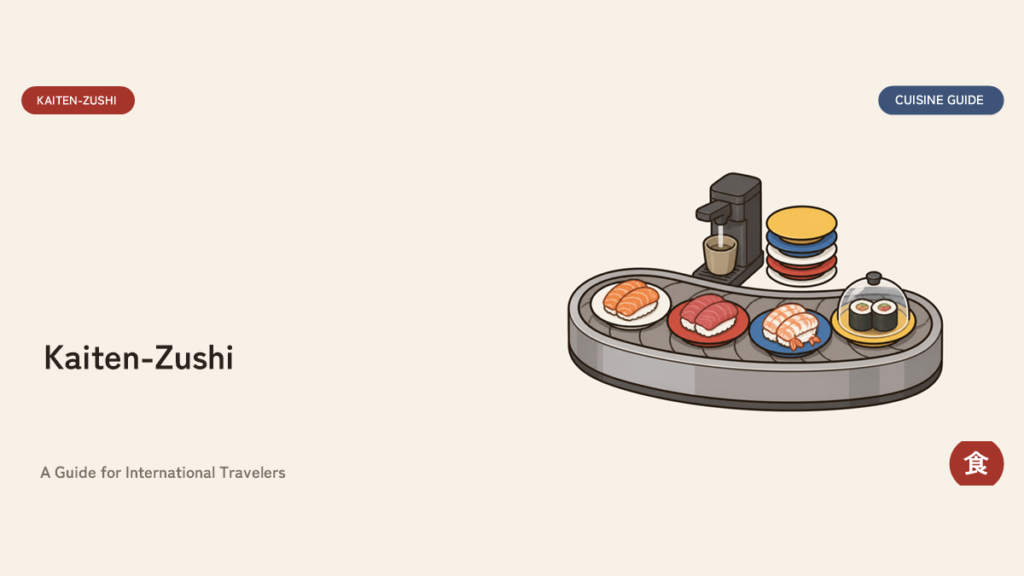
Kaiten-zushi is conveyor-belt sushi: small plates of sushi pass your seat on a belt or lane, and you pay by the plate. It was born in Osaka in 1958. At many big chains you now order on a touch panel with photos (some can be switched to English, Chinese or Korean), and your order arrives on a lane at your seat. Never put a plate back on the lane. Plates typically start at around 100-120 yen (from 120 yen at Sushiro).
What Is Kaiten-Zushi?
Kaiten-zushi (回転寿司, “revolving sushi”) is sushi served in a restaurant where small plates travel past the seats on a conveyor belt or delivery lane. As the Japan National Tourism Organization (JNTO) describes it in its sushi guide, the belt winds past all the seats, and if you see something that looks interesting you simply lift it off. Each plate has a set price, so you can eat as much or as little as you like and pay only for what you take. Compared with a counter-style sushi restaurant, where a chef serves each piece, kaiten-zushi is relaxed and is one of the easiest ways for a first-time visitor to try many kinds of sushi without speaking Japanese.
Today the format comes in two broad styles. At some shops, plates still circulate on the belt for you to take freely. At many large chains, you mainly order on a touch panel at your table and your order is delivered to your seat by a lane. Both are covered below. For sushi in general, including nigiri, rolls and counter-style etiquette, see our sushi guide.
Born in Osaka in 1958
Kaiten-zushi was invented in Japan, and its origin is traced to Osaka. According to the official history published by Genroku Sushi (Mawaru Genroku Sushi), the company’s founder, the late Yoshiaki Shiraishi, took the idea from the conveyor belts used at a beer factory in Suita, Osaka. A “conveyor rotating dining table” was completed in 1957, and in April 1958 the first Mawaru Genroku Sushi opened in Higashi-Osaka (then the city of Fuse). The same history notes that the company took part in the 1970 Japan World Exposition in Osaka, which drew nationwide attention to the format, and that an automatic tea dispenser was developed in 1973. The official account credits this system with turning sushi, once a byword for luxury, into an affordable everyday meal.
If you are in Osaka, you can still eat at a Genroku Sushi branch today; see the shop list at the end of this page.
Two Ways to Get Your Sushi: the Belt and the Touch Panel
Taking plates from the belt. This is the original style. You watch the plates go by and take whatever you want. JNTO also notes that if you are seated at a counter with a chef in front of you, you can order directly from the chef instead of choosing from the belt. Long-running local shops such as Genroku Sushi in Osaka and Musashi Sushi in Kyoto let you take plates from the belt as well as order individual items.
Ordering on a touch panel. At major chains, a touch-screen tablet at your table shows photos of every item. Kura Sushi’s official guide explains that you order on the touch panel or your smartphone and that your order is delivered quickly by an “order lane.” Sushiro’s official English site says its touch panel supports English, Chinese (simplified) and Korean. Some shops, such as Uobei, deliver touch-panel orders on a high-speed lane rather than a slow-moving belt. For travelers, touch-panel ordering is often the easiest option: you can see what each item looks like, check prices before you order, and rarely need to read a Japanese menu or call a server.
How to Order on a Touch Panel, Step by Step
The exact screens differ by chain and by store, but a typical visit to a large touch-panel chain goes like this.
- Check in. At busy chains you usually take a waiting number and are called when a seat is free. Sushiro’s FAQ explains that at most of its restaurants you can book through its smartphone app, either taking a number before you arrive or reserving a time slot, but it does not take table reservations by phone. Kura Sushi’s official site likewise offers table booking by smartphone, which can save waiting time at busy hours.
- Switch the language. Look for a language button on the touch panel at your seat. Sushiro’s official how-to guide for visitors starts with choosing your preferred language on the touchscreen.
- Order by photo. Browse the categories, tap an item, choose the quantity and send the order. Menus at large chains include more than sushi: Sushiro’s English menu has side dishes, desserts and drinks, and Kura Sushi’s lists items from sushi to udon and desserts.
- Collect your order from the lane. When your order arrives on the lane at your seat, take the plate off. At shops with a belt, you can also take plates that are circulating.
- Help yourself to tea and condiments. According to JNTO, green tea is usually self-service at your table or counter. Sushiro’s guide notes that its sushi comes without wasabi, so add it yourself if you want it, and put a little soy sauce on the topping.
- Pay. When you are done, finish on the touch panel. Sushiro’s guide asks you to use the touchscreen for payment, and Kura Sushi explains that pressing the checkout button lets you pay without going through a staff member, because your plates have been counted automatically.
If you are also visiting ramen or beef-bowl shops, many of them use a different system where you pay at a machine before you sit down. Our guide to ticket machines explains how that works.
Etiquette at the Lane
- Never put a plate back. JNTO says you may take plates freely off the belt but should never put one back, and Sushiro’s guide asks customers not to leave or return plates onto the lane. Once you have picked it up, it is yours.
- Keep the lane clear. Sushiro’s guide also asks customers not to lean on the lane and not to put anything on it.
- Use chopsticks or your hand. Sushiro’s guide says you can eat with chopsticks or with your hand.
- Ginger is a palate cleanser. JNTO notes that pickled ginger is eaten between pieces to refresh your palate; it is not a topping.
- Stack your empty plates. At many belt-style shops your plates are counted at the end, so keep them at your seat. At Kura Sushi, the official guide explains that empty plates go into a plate-return slot and are counted automatically.
Budget and Payment
Kaiten-zushi is one of the most affordable ways to eat sushi in Japan. JNTO says prices typically start at 100 yen per plate and that different colored plates have different prices. Sushiro’s official English site lists plates from 120 yen including tax, noting that items and prices may vary at some stores. At Genroku Sushi’s Umeda branch in Osaka, plates are roughly 143-171 yen. Premium items and side dishes cost more, and some shops focus on higher-grade seafood with a higher budget per person, so check the plate prices or the touch panel before you order.
Payment methods vary by chain and store. Sushiro’s English site says all kinds of credit cards and QR-code payments are accepted (with some store-specific limits on QR services), but electronic money is not. Kura Sushi notes that credit cards cannot be used at some stores, where payment is in cash. Carrying some cash is a safe backup.
Families may also like Kura Sushi’s “Bikkura Pon!” game: according to its official guide, every five plates you put into the plate slot gives you a chance to win a small prize.
Raw Fish, Allergies and Dietary Needs
Not everything at kaiten-zushi is raw. Menus at large chains include seared and grilled toppings as well as side dishes and desserts; Sushiro’s English menu, for example, lists seared salmon, seared shrimp, grilled bonito tataki and grilled salmon belly alongside raw fish, and Kura Sushi’s menu includes udon and desserts.
If you have a food allergy, check the chain’s official allergen information before you go. Sushiro publishes an allergen table covering 28 items under Japan’s food labeling rules (the chain notes that pistachio is still being checked) and states that allergens not listed may be unintentionally mixed in during cooking and plating in the store, and that some seafood feeds on or lives alongside shrimp and crab, or is caught by fishing methods in which shrimp and crab get mixed in. Kura Sushi also publishes allergen and ingredient information on its official site. These tables are the chains’ own information, not a guarantee, and both are worth reading in full and confirming with staff, and Sushiro also advises consulting a doctor.
This site does not certify any kaiten-zushi restaurant as halal, vegetarian or vegan. If you follow a halal or plant-based diet, see our halal dining guide and vegan and vegetarian dining guide, and ask the restaurant directly before ordering.
Recommended Kaiten-Zushi by Prefecture
This site covers recommended kaiten-zushi restaurants in Tokyo, Osaka and Kyoto, with a separate guide for each. To compare easy touch-panel chains, a flagship store built for international visitors and a Hokkaido-seafood shop by Tokyo Station, see the best kaiten-zushi in Tokyo. To eat in the city where kaiten-zushi was born, from a Genroku Sushi branch to a Dotonbori shop open until 11 PM, see the best kaiten-zushi in Osaka. For a long-running local shop in central Kyoto and a convenient option by Kyoto Station, see the best kaiten-zushi in Kyoto. Below are representative shops from each prefecture.
Frequently Asked Questions
What does kaiten-zushi mean?
It means "revolving sushi." Plates of sushi travel past the seats on a conveyor belt or lane, and you pay by the plate.
Do I need to speak Japanese?
Usually not. Many large chains use photo touch panels, and Sushiro's official site says its panels support English, Chinese (simplified) and Korean.
Can I put a plate back on the belt?
No. Once you take a plate, keep it. The Japan National Tourism Organization (JNTO) and Sushiro both ask customers never to return plates to the lane.
How much does kaiten-zushi cost?
Plates typically start at around 100-120 yen, and at many shops the plate color shows the price. Premium items and higher-end shops cost more.
Is there anything for people who do not eat raw fish?
Yes. Large chains also serve seared and grilled sushi, side dishes and desserts. If you have an allergy, check the chain's official allergen information and ask staff.
Where to Try It
Genroku Sushi, Umeda
Best for: A branch of the chain that invented conveyor-belt sushi, keeping close to the original belt style; plates roughly 143-171 yen.
View full details →Sushiro Dotonbori
Best for: Osaka-born national chain on the Dotonbori canal; plates from about 120 yen; order on the touch panel and your sushi arrives on a lane at your seat, easy for solo diners.
View full details →Kura Sushi Global Flagship Store
Best for: A flagship Asakusa location designed for international tourists.
View full details →Uobei, Shibuya Dogenzaka
Best for: Tablet ordering with dishes delivered by a high-speed express lane rather than a traditional slow belt.
View full details →Musashi Sushi Sanjo Honten
Best for: A local Kyoto favorite at the Kawaramachi-Sanjo crossing since 1977; take plates from the belt or order on the touch panel.
View full details →Kaiten Sushi Ginza Onodera Kyoto
Best for: The conveyor-belt format of Ginza Onodera, 1 minute from Kyoto-Kawaramachi Station, with menus in English, Chinese and French on its official site.
View full details →