Matcha Cafes: A Guide for International Travelers
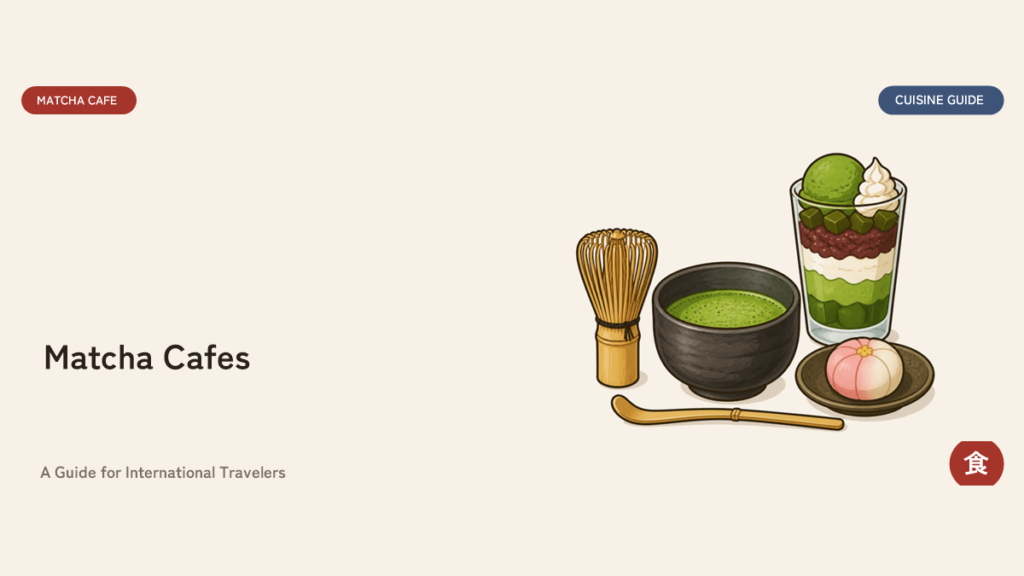
A matcha cafe is a cafe, often run by a tea merchant, where you can have matcha (powdered green tea) as a bowl of tea with a sweet, or in parfaits, soft serve and lattes. Matcha as it is known today was born in Uji, Kyoto in the 16th century, when growers began shading tea fields with reed screens. You do not need to know the tea ceremony: at a cafe you simply order from the menu. Soft serve is the cheapest choice (704 yen at Tsujiri arde Shin-Osaka), and a sit-down parfait or tea set costs more.
What Is a Matcha Cafe?
Matcha is powdered green tea: instead of steeping leaves and throwing them away, you whisk the ground leaf into hot water and drink all of it. In Japan, many travelers taste it at cafes run by tea merchants. Many of them sell tea leaves on one floor and run a tea room or cafe on another, where the same matcha goes into a bowl of tea, a parfait, soft serve or a latte. That is what this guide means by a matcha cafe: a shop where you can sit down and have matcha as a drink or as a sweet, usually from a company that also deals in tea.
You do not need to know the tea ceremony to enjoy one. At most of the cafes on this site you simply sit down and order from the menu or buy at a counter, and many travelers visit just for a matcha parfait or soft serve. This page explains where matcha comes from, what is on the menu, how to drink a bowl of matcha, and what to expect on budget, timing and payment.
Where Matcha Comes From: Uji, Kyoto
Much of the story of matcha in Japan is tied to Uji, just south of Kyoto city. According to Kyoto Prefecture’s Japan Heritage materials for the Yamashiro area of southern Kyoto, in the 13th century the monk Myoe is said to have taught the villagers of Uji how to grow tea, using the method the Zen master Eisai had brought from China. In the 15th century Uji tea won the favor of the Ashikaga shoguns and came to be regarded as the finest tea in Japan.
The step that created matcha as it is known today came in the 16th century. The same materials explain that in Uji, at the request of tea masters such as Sen no Rikyu, growers began covering tea fields with screens woven from reeds. This shaded cultivation (ooishita saibai) produced tencha, a tea leaf with less astringency, and gave rise to matcha with a vivid deep-green color and strong umami. Kyoto Prefecture notes that sencha and gyokuro were later developed in the same Yamashiro area of southern Kyoto, and that in Shirakawa, in Uji city, tea is still grown under natural reed screens.
Several of the matcha cafes in Tokyo and Osaka on this site are also run by tea merchants with roots in Uji or Kyoto. If you want to drink matcha where it began, Nakamura Tokichi Honten is about 2 minutes on foot from JR Uji Station.
What to Order
Menus differ by shop, but most matcha cafes offer some of the following.
- A bowl of matcha with a sweet. The most traditional choice. Usucha (“thin tea”) is the style most cafes serve; koicha (“thick tea”) is made with more tea powder and is thicker. At Ippodo Tea Aoyama, a Kyoto tea merchant’s tea room in Tokyo, both koicha and usucha are served with a sweet, according to its official site.
- Matcha parfaits. Tall glasses layered with matcha ice cream, jelly, sweet bean paste and more. Gion Tsujiri in Kyoto and its cafe brand Saryo Tsujiri (with branches at Daimaru Tokyo and Daimaru Shinsaibashi) are known for them; the official page of Saryo Tsujiri, Daimaru Tokyo names the Tokusen Tsujiri Parfait, with the shop’s own sweet bean paste and matcha jelly, as its most popular.
- Soft serve and gelato. The quickest option. Tsujiri arde Shin-Osaka lists a rich matcha soft serve at 704 yen on its official menu, and Suzukien in Asakusa lets you choose matcha gelato in seven strengths, from No. 1 (mildest) to No. 7. Note that Tsujiri is a different company from Gion Tsujiri and Saryo Tsujiri, despite the similar name.
- Lattes and other drinks. Many shops serve matcha lattes and cold matcha drinks to take away. Ippodo Tea Aoyama, for example, sells takeout matcha and matcha latte.
- Other Japanese teas. Some shops let you compare. Saryo Tsujiri in Shinsaibashi has a “cha-cha-cha set” of matcha, hojicha and genmaicha, and Ippodo’s tea room also serves gyokuro, sencha, premium hojicha and iri-bancha.
Not every sweets shop on a matcha tour is a matcha shop. Kagizen Yoshifusa in Gion, for example, is a historic confectionery known for kuzukiri, chilled arrowroot noodles in dark syrup, and is worth a visit as another side of Kyoto’s sweets culture.
How to Drink a Bowl of Matcha
At a casual cafe there is no test, and you can simply drink your matcha the way you like. If you would like to follow the custom of a formal tea service, the Japan Tourism Agency’s multilingual explanation of the tea service at Urakuen garden (Inuyama, Aichi) describes these steps.
- Eat the sweet first. Cut it into bite-sized pieces with the small pick and eat it. The sweet is intended to balance the flavor of the matcha, so try to finish it before the tea arrives.
- Hold the bowl in your left palm. Pick up the bowl and rest it in the palm of your left hand.
- Turn the bowl. Turn it about 90 degrees clockwise so that you do not drink directly from its front, a gesture of humility toward the host.
- Drink, then turn it back. When you have finished, turn the bowl counterclockwise so the front faces away from you again, and put it down.
The same explanation notes that usucha is made with less tea powder than koicha, and that koicha is generally served only after a meal at full-length tea gatherings. If you are new to matcha, usucha is the easier place to start.
One more piece of tea-room manners: Ippodo Tea Aoyama asks visitors to avoid strong scents such as perfume and hand cream so that guests can enjoy the aroma of the tea.
Budget, Timing and Payment
Budget. A soft serve or takeout drink is usually the cheapest way in: Tsujiri arde Shin-Osaka lists its matcha soft serve at 704 yen, and Ippodo Tea Aoyama lists takeout matcha at 972 yen and matcha latte at 1,080 yen (prices including tax, and they can change). A sit-down parfait or a bowl of tea with a sweet usually costs more; Nakamura Tokichi Honten and Gion Tsujiri fall in this site’s budget range of about 1,000 to 3,000 yen per person.
Timing. Closing times vary widely, so check before you go late in the day. Nakamura Tokichi Honten’s cafe takes last orders at 4:30 PM, Ippodo Tea Aoyama’s tea room at 5:30 PM, and Saryo Tsujiri, Daimaru Tokyo is open until 8:00 PM. For an evening visit, Gion Tsujiri in Kyoto is open until 9:00 PM (soft serve last order 8:00 PM), and Tsujiri arde Shin-Osaka until 9:00 PM (seating until 8:30 PM). Popular shops can have long lines; Suzukien in Asakusa is known for them.
Rainy days and travel days. Several shops are inside stations or department stores. Saryo Tsujiri has a branch in Daimaru Tokyo, right outside the Yaesu North gates of Tokyo Station, and another in Daimaru Shinsaibashi, connected underground to Shinsaibashi Station in Osaka; MACCHA HOUSE is in Namba’s underground mall, and Tsujiri arde Shin-Osaka is just upstairs from the shinkansen gates.
Payment. It varies by shop. Saryo Tsujiri, Daimaru Tokyo accepts cash, cards and QR payments, while Ippodo Tea Aoyama does not accept cash at all (card, transit IC card or smartphone payment only). Where this site has not confirmed the payment methods, carrying some cash is a safe backup.
Allergies and Dietary Needs
Matcha itself is tea, but matcha sweets such as parfaits, soft serve, gelato and tiramisu are made with other ingredients, and recipes differ by shop. If you have a food allergy or follow a vegan, vegetarian or halal diet, check each shop’s ingredient information and ask staff before ordering. This site does not certify any matcha cafe as halal, vegetarian or vegan; see our vegan and vegetarian dining guide and halal dining guide for restaurants that state their own policies.
Recommended Matcha Cafes by Prefecture
This site covers recommended matcha cafes in Kyoto, Tokyo and Osaka, with a separate guide for each. For matcha at its source in Uji and evening parfaits in Gion, see the best matcha cafes in Kyoto. For Uji tea merchants’ cafes in Ginza and at Tokyo Station, seven-strength gelato in Asakusa and a Kyoto tea room in Aoyama, see the best matcha cafes in Tokyo. For parfaits in Shinsaibashi, an underground tiramisu shop in Namba and soft serve by the Shin-Osaka gates, see the best matcha cafes in Osaka. Below are representative shops from each prefecture.
Frequently Asked Questions
What is the difference between usucha and koicha?
Usucha ("thin tea") is the style most cafes serve. Koicha ("thick tea") is made with more tea powder and is thicker; according to the Japan Tourism Agency, it is generally served after a meal at full-length tea gatherings.
Why is Uji famous for matcha?
According to Kyoto Prefecture, in the 16th century Uji growers began shading tea fields with reed screens, which produced tencha, a less astringent leaf, and gave rise to vivid green, umami-rich matcha.
Do I need to know the tea ceremony?
No. At a cafe you can drink your matcha however you like. If you want to follow formal custom, eat the sweet first, rest the bowl in your left palm and turn it about 90 degrees clockwise before drinking.
Can I have matcha sweets in the evening?
Yes. Gion Tsujiri in Kyoto (soft serve last order 8:00 PM) and Tsujiri arde Shin-Osaka (seating until 8:30 PM) are open until 9:00 PM, and Saryo Tsujiri, Daimaru Tokyo until 8:00 PM. Some cafes close much earlier, such as Nakamura Tokichi Honten (cafe last order 4:30 PM).
Are matcha sweets vegan or allergy-friendly?
It depends on the shop. Parfaits, soft serve and other sweets are made with other ingredients besides matcha, so check each shop's ingredient information and ask staff. This site does not certify any matcha cafe as vegan, vegetarian or halal.
Where to Try It
Nakamura Tokichi Honten
Best for: Matcha sweets and parfaits in a converted tea factory in Uji itself, 2 minutes from JR Uji Station; cafe last order 4:30 PM.
View full details →Gion Tsujiri
Best for: Uji tea merchant founded in 1860: tea leaves downstairs, matcha parfaits upstairs; open until 9:00 PM.
View full details →Ippodo Tea Aoyama
Best for: Tea room of a Kyoto tea merchant founded in 1717; koicha and usucha with a sweet; closed Mondays, cashless.
View full details →Suzukien Asakusa Honten
Best for: Matcha gelato in seven strengths, No. 1 to No. 7, just behind Sensoji.
View full details →Saryo Tsujiri, Daimaru Shinsaibashi
Best for: Gion Tsujiri's first Osaka cafe, connected underground to Shinsaibashi Station; matcha, hojicha and genmaicha tasting set.
View full details →Tsujiri arde Shin-Osaka
Best for: Shop of an Uji tea house founded in 1860, right by the Shin-Osaka Station gates; matcha soft serve 704 yen, open until 9:00 PM.
View full details →